Oct 10 2026 | २०८३, आश्विन २४ गते

२०८३, आश्विन २४ गते
Oct 10 2026 | २०८३, आश्विन २४ गते

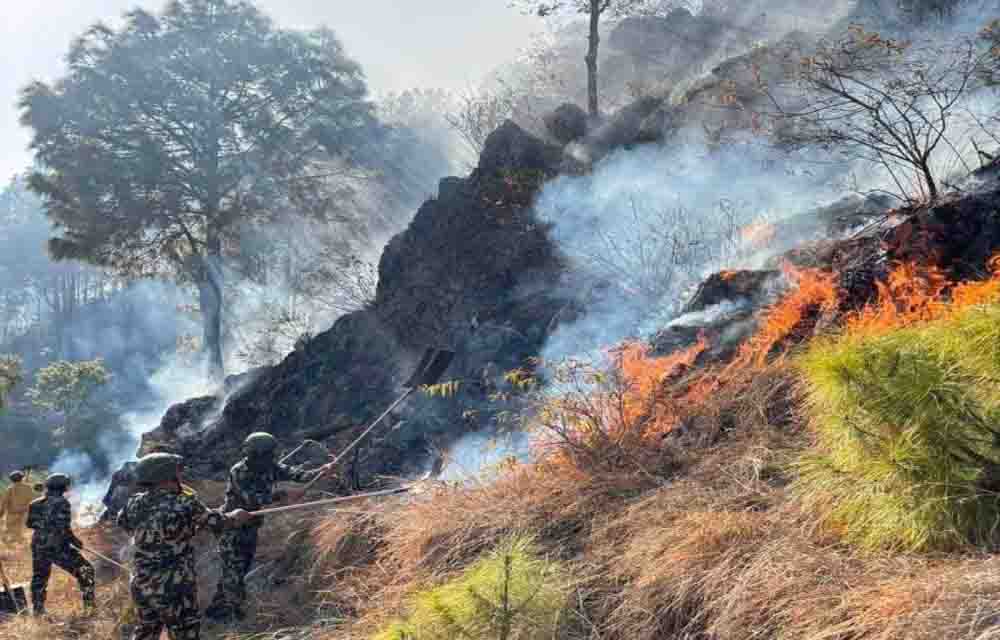


नेपाल सम्वत् ११४५ चिल्लागाः २ (३ चैत्र, २०८१) मार्च १६, २०२५ ,आइतबार, बाँपीझ्याला ।A recent study published in the Information Geography journal highlights the severe threat Nepal's forests face from climate-exacerbated wildfires. Conducted by an international team of researchers from Arizona State University, Jackson State University, the University of Groningen, and Kathmandu Forestry College, the study warns that unchecked fire risks could release 170 million tonnes of soil carbon and 325 million tonnes of wood carbon into the atmosphere, exacerbating global climate challenges. Using NASA Earth Observations and machine learning, the study provides the first national-scale analysis of Nepal's fire-carbon-biodiversity nexus, revealing alarming trends.
Nepal's wildfire season, which peaks in April and May, has already begun, with fires currently burning in 436 locations across 53 districts. The southern provinces—Lumbini, Madhes, and Sudurpaschim—are at the highest risk, with six of Nepal's 20 protected areas, including Chitwan and Bardia National Parks, under extreme threat. These fires endanger rare species like Bengal tigers, one-horned rhinos, and wild elephants, while also worsening air quality in cities like Kathmandu. The economic impact is significant, as tourism, contributing 4% of Nepal's GDP, relies heavily on these protected areas. Additionally, wildfires threaten medicinal plants and Indigenous livelihoods.

Lead author Kshitij Dahal, a doctoral student at Arizona State University, compared Nepal's situation to the Los Angeles wildfires, noting that Nepal's fires threaten unique biodiversity. Prof. Ambika P. Gautam of Kathmandu Forestry College emphasized the urgency of action, stating, "If we do not act now, we risk losing critical biodiversity and worsening global climate change." Dr. Rocky Talchabhadel from Jackson State University warned that rising wildfire risks since 2001 could undo decades of conservation efforts, turning carbon sinks into carbon sources.
The study calls for immediate fire mitigation strategies, including community-led patrols and AI-based early warning systems, cross-border collaboration through South Asian climate partnerships, and global climate funding to prioritize Nepal's forests in COP30 agendas. Dr. Prajal Pradhan from the University of Groningen stressed the need for sustainable solutions, such as sustainable forest management, to reduce fire risks and protect Nepal's forests. Pashupati Nath Koirala of StoryCycle highlighted that fires in isolated and protected areas threaten biodiversity, carbon trade benefits, and Nepal's goal of becoming a net-zero carbon country by 2045.
The study underscores the urgent need for action to protect Nepal's forests, biodiversity, and climate goals.















१९९७–०७७–०७८
© 2026 All right reserved to bampijhyala.com | Site By : Sobij